(posted on behalf of Jain Alcock-White)
I attended the dryland Crevasse Rescue Workshop in Nanaimo on April 25, hosted by Doug. There were eight ACCVI attendees, with a range of glacier travel and crevasse rescue experience.
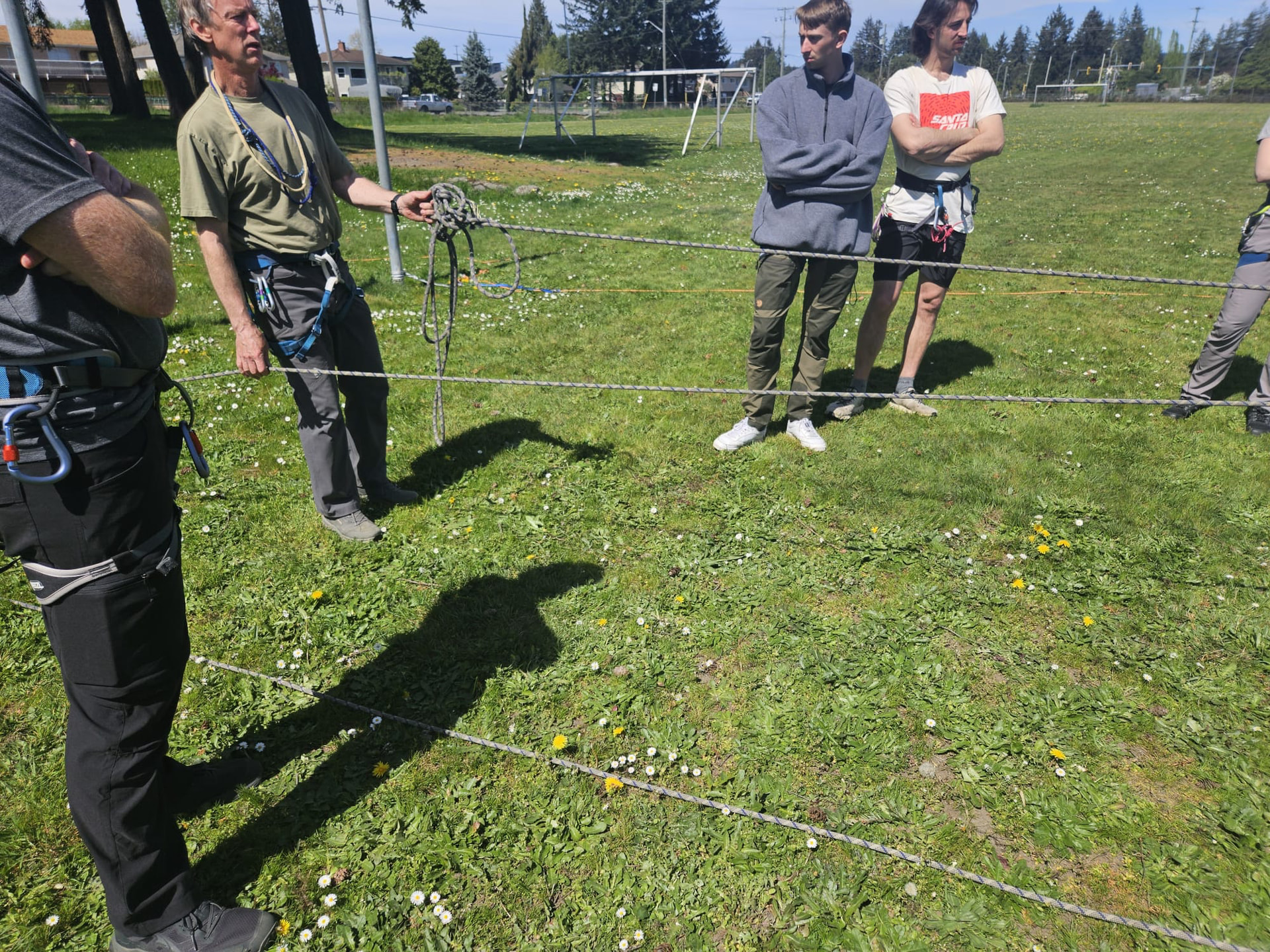
The workshop took place in the Woodlands School yard in Nanaimo, which proved to be an excellent venue. Benches near the playground provided a convenient setup area, the woodchip surface allowed Doug to effectively demonstrate T-slots and other snow anchor techniques, and three large metal posts below the benches served as ideal fixed anchors for building and testing haul systems.
Doug began by walking us through the resource he had shared in advance, reviewing key safety considerations, equipment, and rescue principles in detail. After a short break, we divided into groups of three to begin hands-on practice building haul systems.
We started with a drop loop system, which is useful when the fallen climber is upright and able to clip into a carabiner and pulley. This technique is also helpful when the rope is buried at the lip of the crevasse, allowing rescuers to redirect the load and create a cleaner working edge while still keeping the system within reach of the victim.
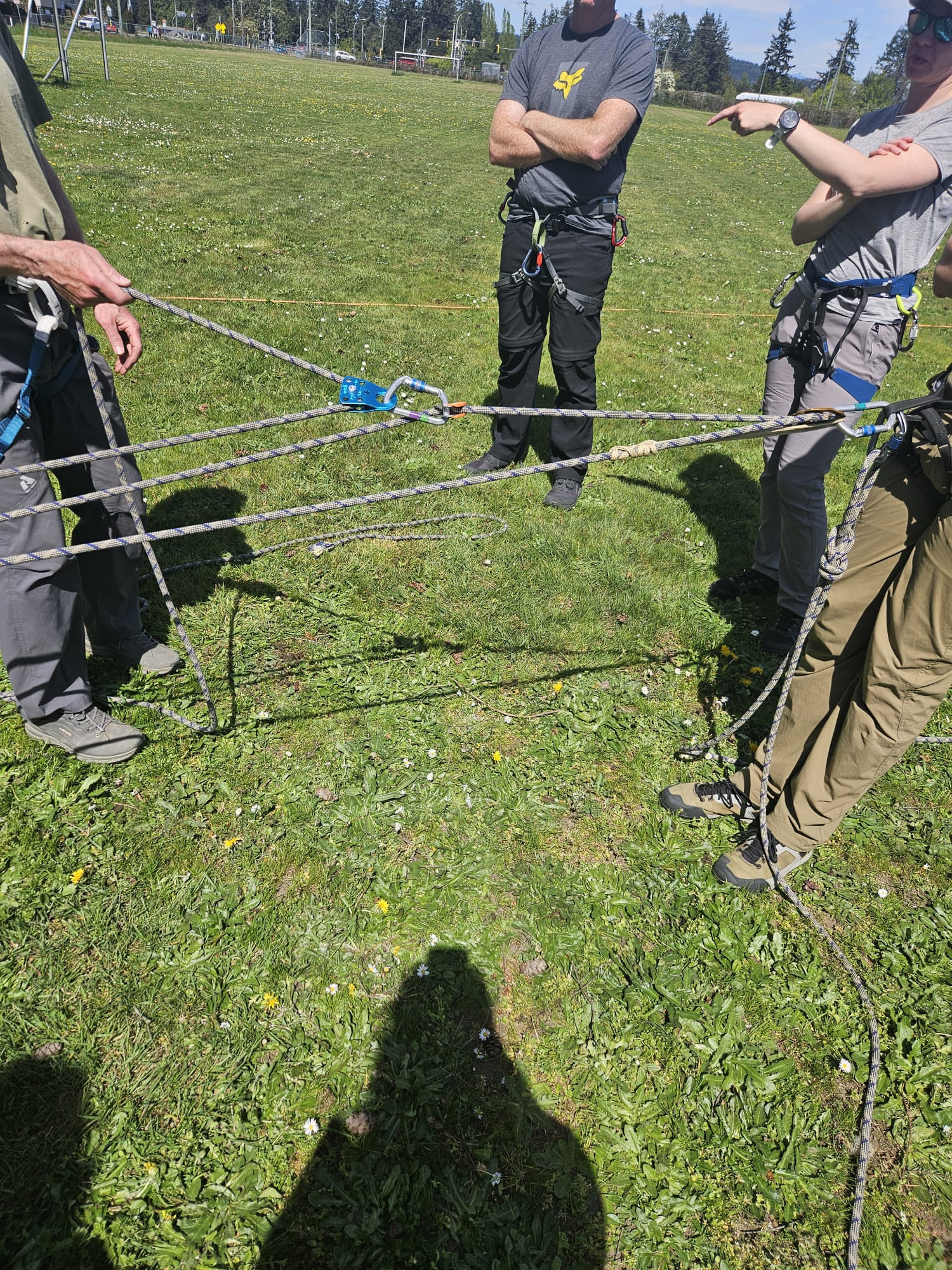
From there, we built and practiced 2:1 and 3:1 mechanical advantage systems, which form the foundation of most crevasse rescues. These systems balance efficiency and simplicity - important in real scenarios where time, cold, and stress are factors. We then expanded on these by constructing 6:1 and 9:1 systems, typically by compounding a 3:1 or 2:1 setup. This highlighted how mechanical advantage can be increased when hauling forces are insufficient, while also demonstrating the trade-offs - more complexity, more rope in the system, and increased friction.
A key takeaway was understanding that theoretical mechanical advantage (e.g., “3:1”) is rarely achieved in practice due to friction at pulleys, rope drag over the lip, and inefficiencies in the system. Efficient setups - using progress capture pulleys, minimizing bends in the rope, and maintaining clean alignment - make a significant difference in real-world performance.
Through repetition, many of us began to recognize the underlying patterns in these systems. While there is a logical structure to haul systems, the ability to visually track rope pathways and understand load direction is critical - especially when systems begin to look like a complex zig-zag of rope running between the anchor, the load, and multiple pulleys.
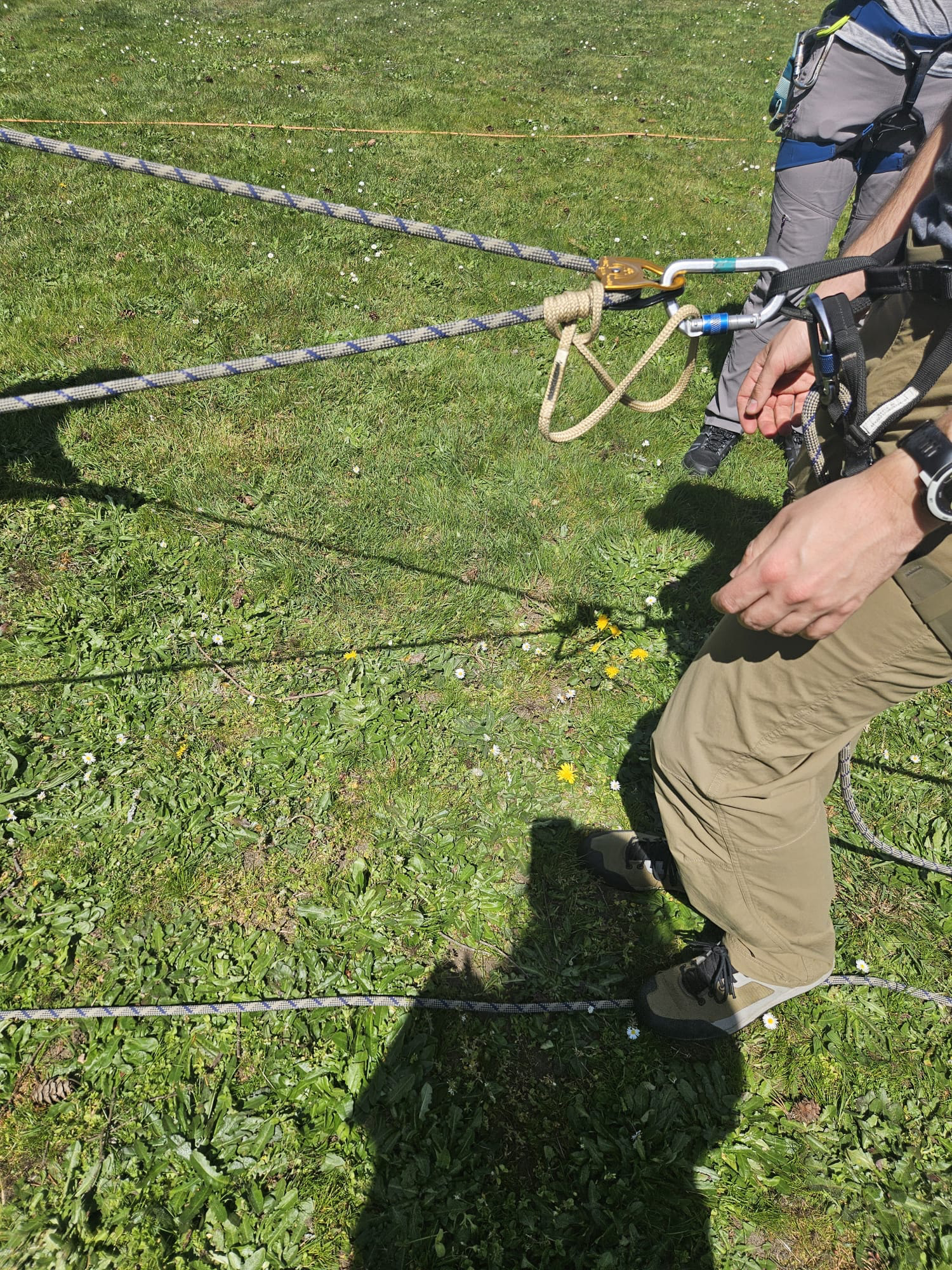
Doug circulated between groups throughout the session, offering guidance, troubleshooting setups, and reinforcing best practices, particularly around keeping systems simple, avoiding unnecessary complexity, and maintaining clear communication within a rescue team.
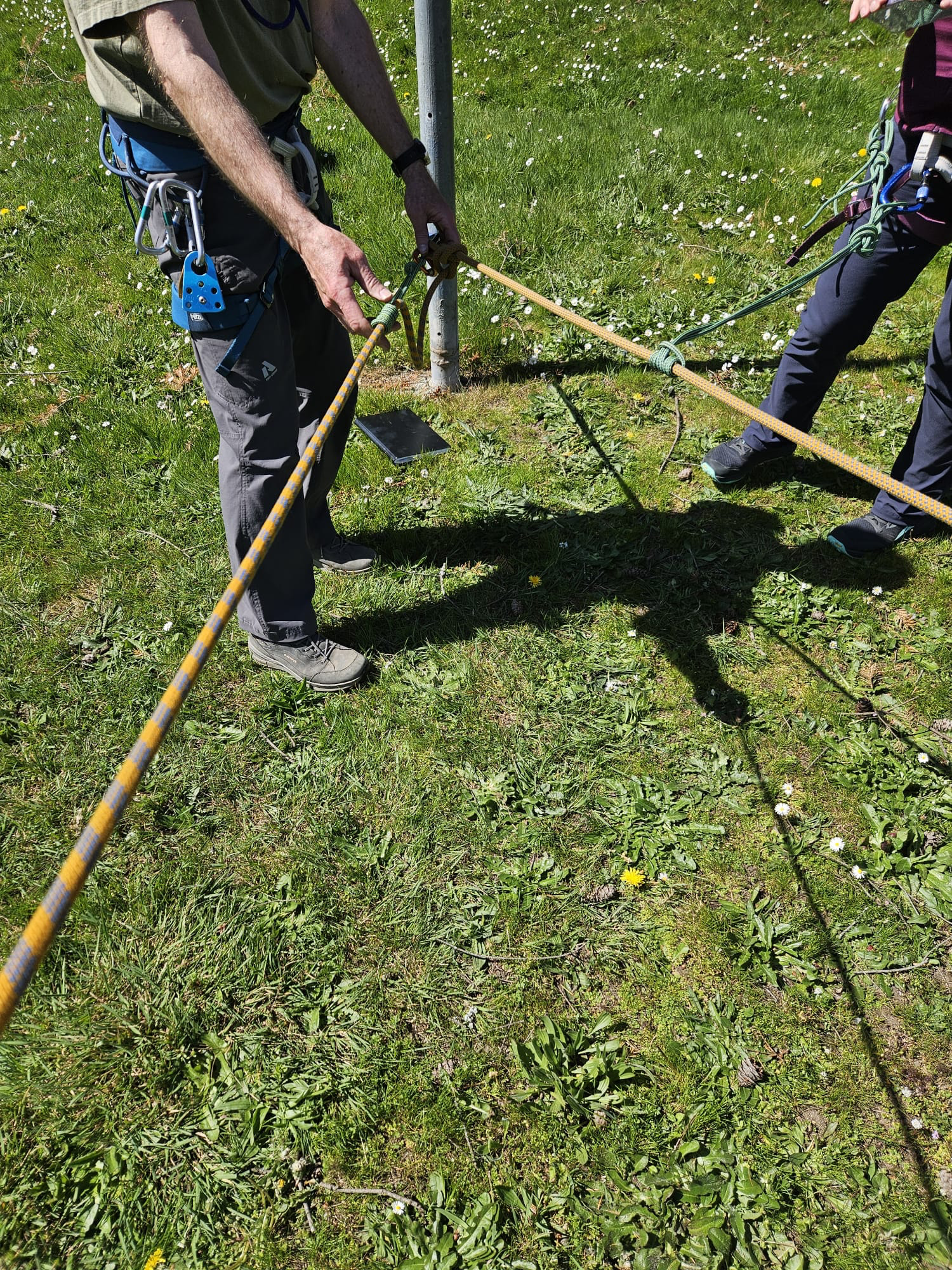
We practiced building and rebuilding systems until about 3:00 p.m., by which point participants had gained confidence and a much stronger working understanding of haul system construction. Many of us left with the intention of continuing to practice independently to reinforce these skills.
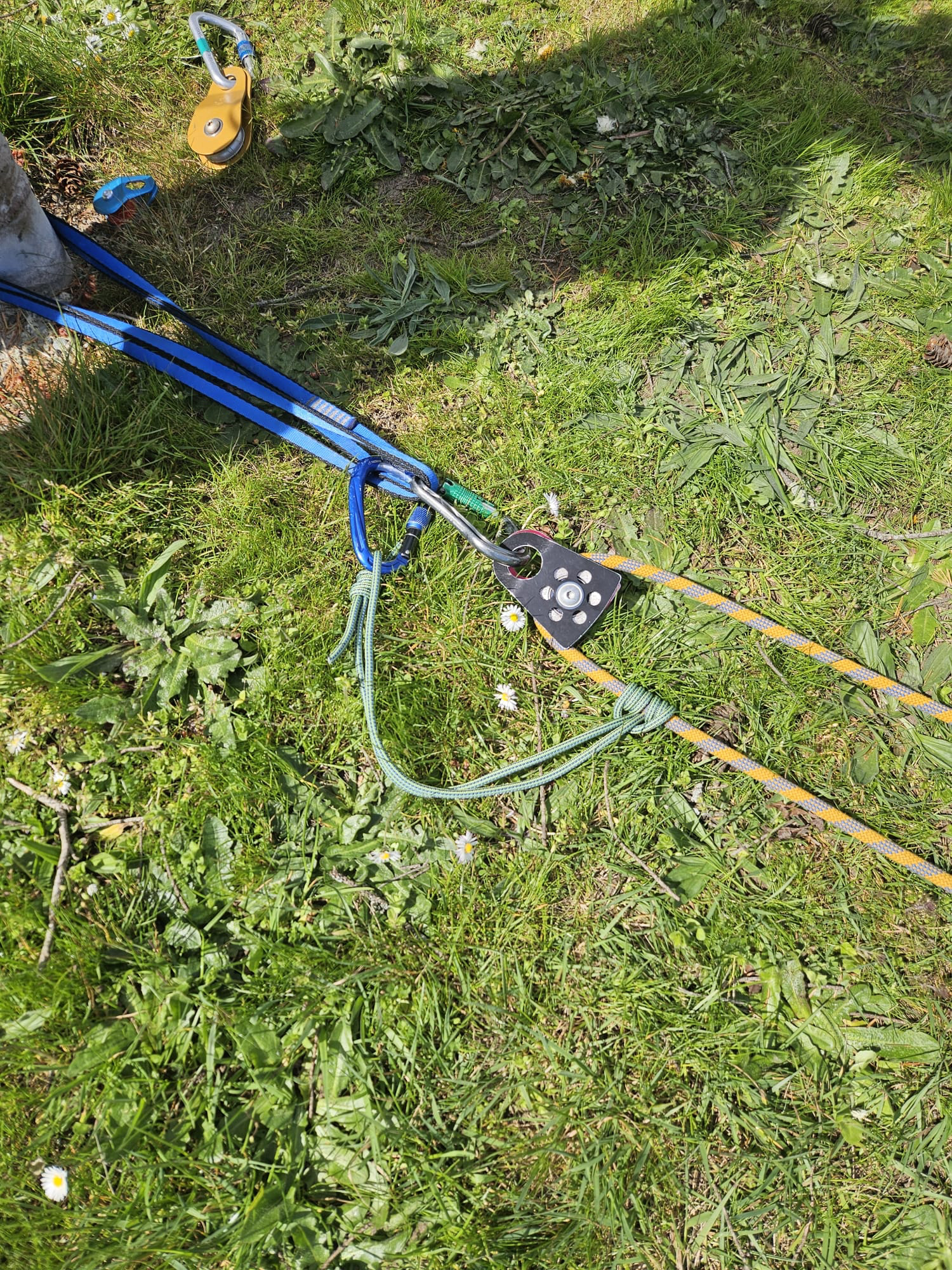
In addition to haul systems, the workshop emphasized broader crevasse rescue priorities: arresting the fall, establishing solid anchors, protecting the rope at the lip, communicating with the victim, and managing risks such as hypothermia and suspension trauma. The importance of preparation, both in terms of equipment and pre-trip planning, was a consistent theme throughout the day.
Overall, the workshop provided a valuable opportunity to translate theory into hands-on practice in a low-risk environment, helping build the confidence and competence needed for real glacier travel and rescue scenarios.